The Rise of Agentic UI
Key Concept: Agentic UI is the shift from Reactive design (responding to clicks) to Proactive design (predicting needs and executing steps on behalf of the user).
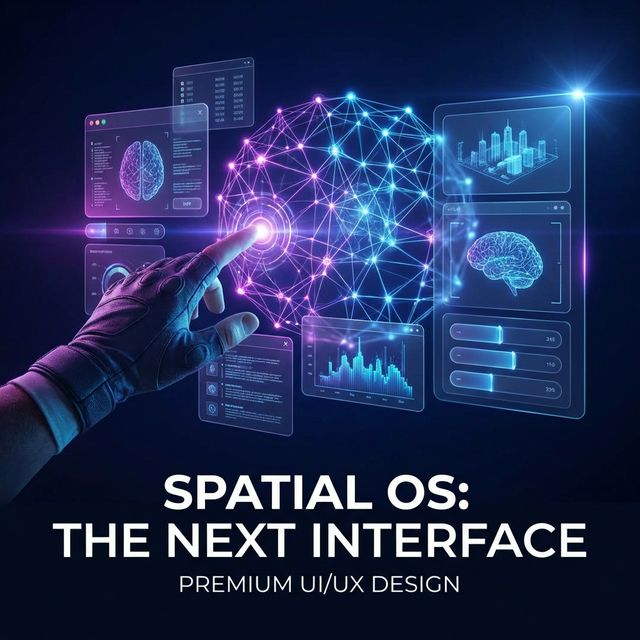
Spatial UX: The World as a Canvas
-
3D Depth & OcclusionUI elements now recognize physical objects. A virtual terminal can sit on your real desk, and if someone walks in front of it, the digital light correctly occludes.
-
Gaze-Based InteractionHover states are now triggered by where you look. Designers must balance "affordance" with "unintentional triggers" to avoid "Midas Touch" syndrome.
-
Environmental AwarenessInterfaces adapt their color palette and brightness based on the actual lighting of the room you are in, ensuring legibility and comfort.
Hyper-Personalized Interfaces
| Personalization Layer | Traditional UX (2020) | Hyper-UX (2026) |
|---|---|---|
| Visuals | Dark/Light Mode toggles | Generative color schemes based on mood |
| Navigation | Static Sidebar | Dynamic flows that surface the next 3 most likely actions |
| Accessibility | Toggle-able High Contrast | Real-time sensory adjustment for neurodiversity |
| Content | Algorithm-fed Feed | Synthesized summaries tailored to your reading speed |
Design Tip: Stop designing static screens. Start designing component logic. Focus on creating rules for how a component should adapt, rather than how it looks in a single state.
The Return of Texture: Tactile Maximalism
Visual Elements
- Real-time Refraction: UI elements distort the background realistically.
- Dynamic Soft Shadows: Shadows that move with your light source.
- Organic Motion: Easing curves that mimic weight and inertia.
Haptic Synergy
- Visual Haptics: Micro-animations that "look" like they feel something.
- Physical Feedback: Syncing visual pulses with wearable vibration.
- Layered Depth: Using Z-axis to denote hierarchy clearly.
Neurodiverse & Accessibility-First Design
-
Cognitive-Load ManagementInterfaces that detect when you are overwhelmed and automatically switch to a "Minimum Viable UI" with high-priority actions only.
-
Multimodal RedundancyEvery interaction is simultaneously available via voice, gesture, gaze, and touch, ensuring no user is left behind by a single hardware limitation.
From Architect to Curator
Perspective: Don't fear the AI. Embrace it as the most powerful "auto-layout" tool ever created. Your taste and empathy are now more valuable than your ability to use Figma's pen tool.
My Take: The Human Element
As I integrate these latest trends into my own work at Tech Insights, I've realized one thing: the more "autonomous" technology becomes, the more we crave authentic human connection. In 2026, the best products won't just be the "smartest"—they'll be the ones that feel the most human.
- AI as an Assistant, not a Replacement: Use tech to remove the boring parts of life, so we have more time for the creative parts.
- Spatial Design is about Presence: Designing for the Z-axis isn't about more data; it's about making digital interactions feel as "real" as physical ones.
- Ethics is the New UX: Privacy, transparency, and intent-alignment are the most important "usability" metrics of the future.
Whether you're developing the next spatial OS or a hyper-personalized web app, remember that the end goal is always the same: empowering the person on the other side of the glass (or lens).